Open three real estate sites this week and ask each one the same question: what did a home in Bennington, Nebraska actually sell for this year? Zillow's home value index puts the town's average at $412,619, up a modest 0.3 percent over the past year, with homes going to pending in about 12 days. Redfin's monthly read shows an average house price closer to $405,000, but its year-over-year change reads plus 26.6 percent, with homes taking around 42 days to go pending. Movoto's June 2026 numbers put the median list price at $419,000, down 2 percent from a year earlier, with a typical home spending 81 days on the market before it sells. Three trackers, three different stories about the same small town in roughly the same stretch of 2026: flat, sharply rising, and modestly falling, all at once.
None of these numbers is wrong. Each one is doing exactly what it's built to do, which is pull a snapshot from whatever homes happened to close or list in whatever window that particular site measures. The challenge is that each site measures a different set of homes over a different window, so a single snapshot can be hard to interpret on its own.
Why Six Closings Can Move a Median
Go back and look at a Redfin monthly pull from May 2025 and the mechanism becomes visible. That month, Bennington recorded a median sale price of $473,000, up 5.2 percent from the year before. The detail that explains everything sits a few lines down: six homes sold that month, the same number as the year before. Six sales is not a market. It's a small sample that can be reshaped entirely by whichever six houses happen to close.
If one of those six is a custom build in a subdivision like Majestic Pointe, on the new NRD lake and recreation area near 168th and State Street, the median jumps. If two or three of the six are older three-bedroom ranches near Bennington's original core, updated with a newer roof or a refreshed kitchen and priced well under half of what new construction runs, the median drops just as fast. Neither outcome tells you anything about where the broader market is heading. It tells you which six sellers happened to find buyers that particular month.
The more reliable number comes from a larger sample. A Nebraska statewide market report covering roughly the first half of 2026 recorded 220 closings in Bennington over six months, a median sale price of $389,945 across that stretch. Spread across six months, that's an average of somewhere around three dozen closings a month, several times the sample size behind any single-month portal snapshot. That's still a small town by transaction volume, but it's a far steadier number than one built on six sales, and it's the figure worth anchoring to if you're trying to understand where Bennington actually sits.
The same report puts Bennington in useful company. Over that same six-month window and using the same methodology, Elkhorn's median came in at $565,062, Gretna at $440,000, and Papillion at $435,000. Comparing those four numbers to each other is a fair apples-to-apples exercise, because they're pulled the same way over the same period. Comparing Bennington's Zillow number to Gretna's Redfin number, or either one to a single thin month of Bennington closings, isn't a comparison at all. It's noise dressed up as insight.
| Source | What it reported | Window |
|---|---|---|
| Zillow home value index | $412,619 average value, up 0.3% year over year, ~12 days to pending | Updated May 31, 2026 |
| Redfin monthly snapshot | $405,000 average house price, up 26.6% year over year, ~42 days to pending | Recent monthly pull |
| Movoto | $419,000 median list price, down 2% year over year, 81 days on market | June 2026 |
| Statewide six-month report | $389,945 median sale price across 220 closings | First half of 2026 |
Bennington Isn't One Market, It's Three
Part of why a single townwide number swings so hard is that Bennington's housing stock isn't one product. It's at least three, blended into a single median that doesn't actually describe any of them well.
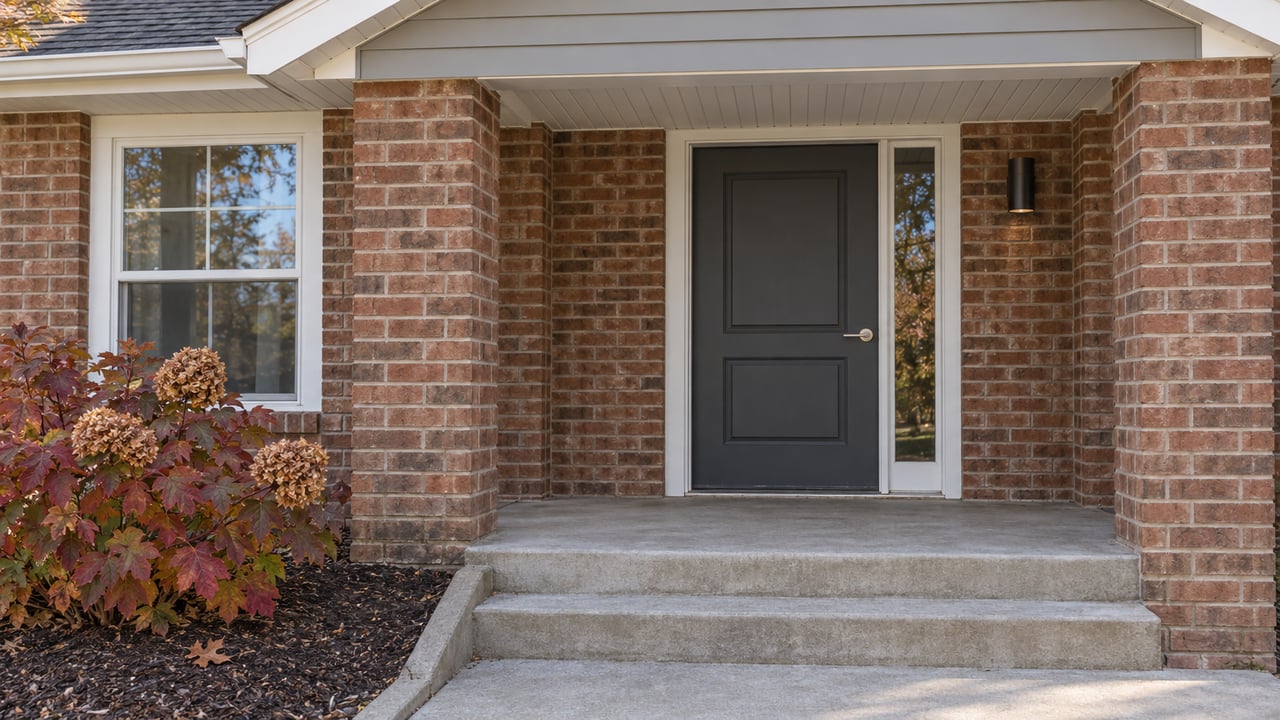
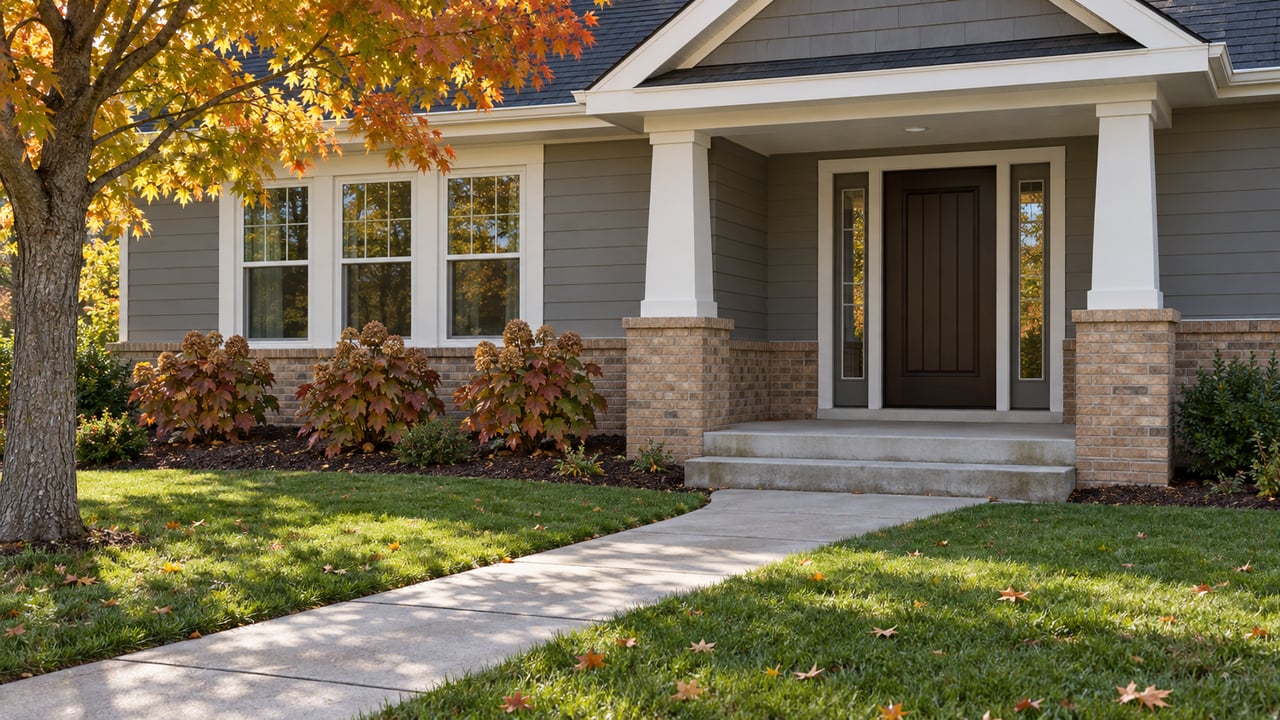
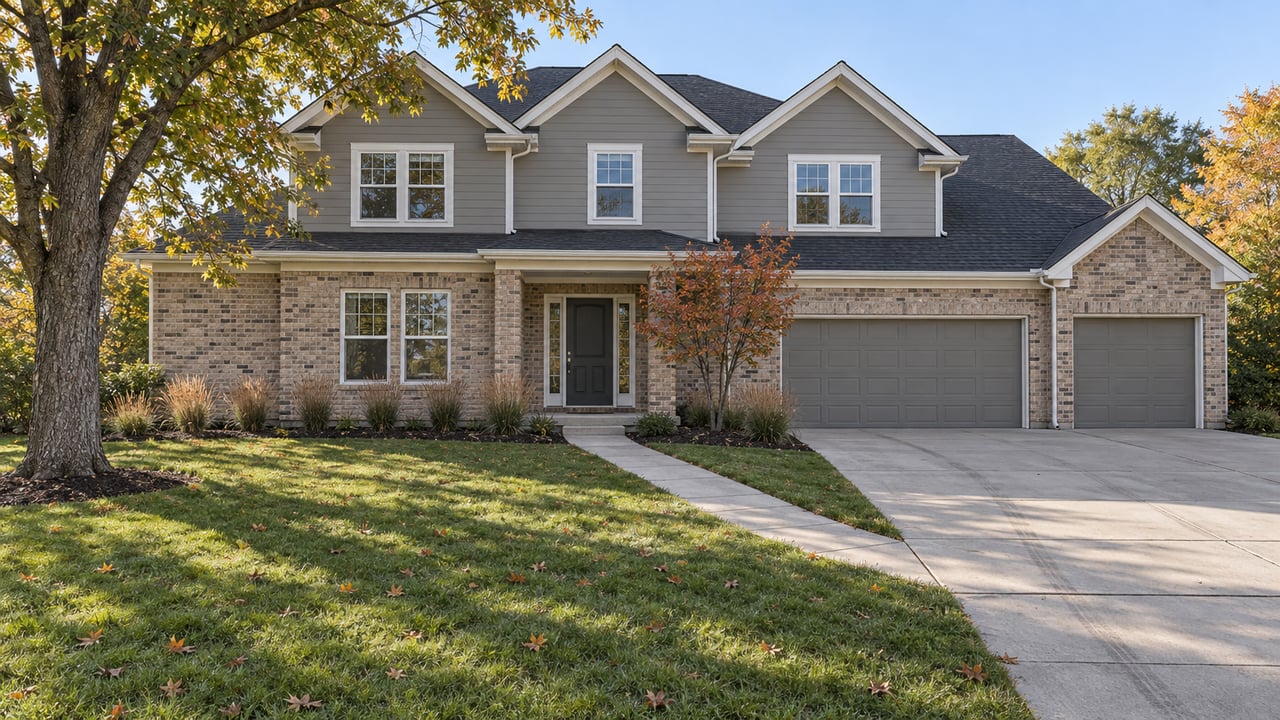
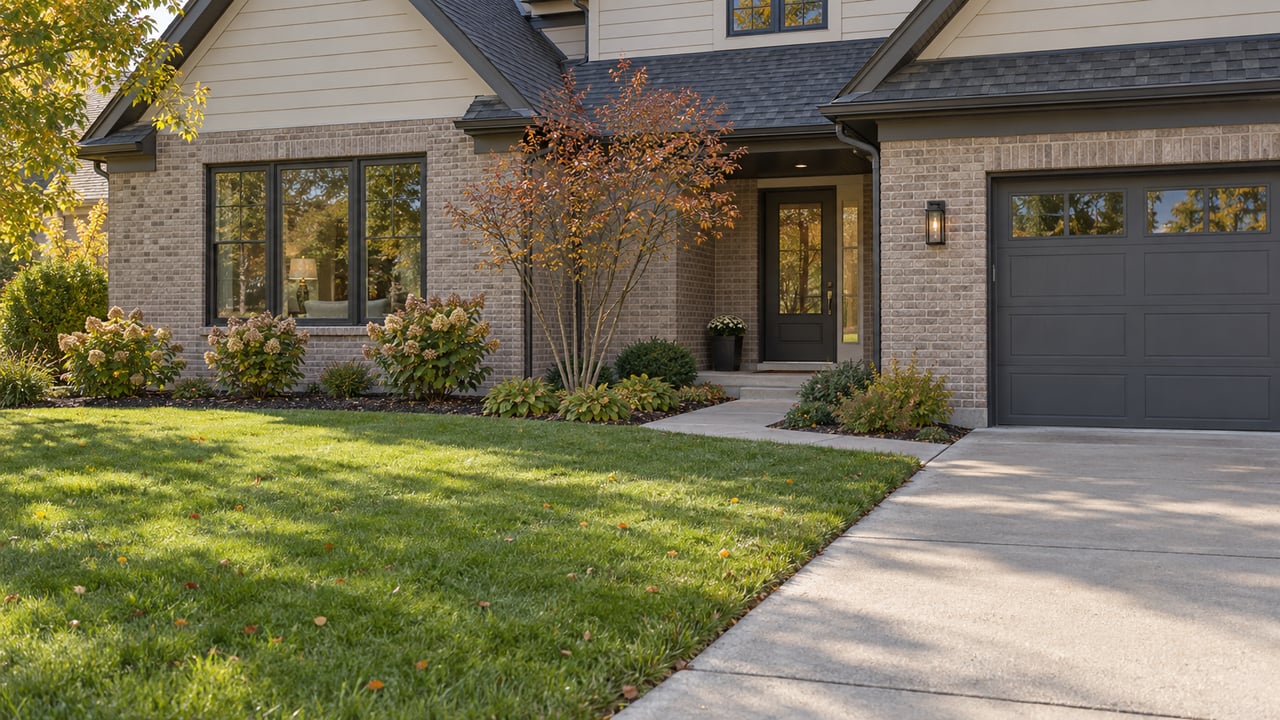
- New-construction subdivisions. Majestic Pointe, developed in phases with builder-attached lots near the new NRD lake, sits at one price point. The Hill, a D.R. Horton community in northwest Bennington with homes ranging from about 1,500 to over 2,000 square feet, sits at another. Pine Creek, built around Pine Creek Elementary near 165th and State Street, and Heritage, east of 156th Street, round out the newer product. These homes tend to carry higher price tags and newer finishes, and when several close in the same month, they pull the townwide average up.
- In-town resale. Older homes closer to Bennington's historic core, many of them ranches built decades ago and updated over time, typically list and sell for well under what new construction commands. When a cluster of these close together, the median falls just as sharply as it rose the month before.
- Acreage and well-and-septic properties. On the town's fringe, especially toward the Washington County line, buyers find 5 to 30-acre parcels where the well and septic system is sometimes still to be installed by the buyer. These properties price on land and acreage as much as on square footage, and land near Bennington has recently averaged somewhere in the range of $128,000 per acre for raw parcels, a completely different pricing logic than a finished subdivision home.
None of these three tiers is more representative of "Bennington" than the others. A buyer asking what a home costs in town needs to know which of the three they're actually asking about.
A New Rental Development Is About to Come Online
The blend is about to get more complicated. In April 2026, the Bennington Planning Commission held a hearing on the Prairie Ridge Townhomes Redevelopment Project, a tax increment financing proposal from BPW Smart Development LLC to build 54 rental townhomes on a long-stalled 7-acre site east of North 160th Street and north of North Fourth Street. The project plan lists construction running from March 2026 through September 2028, with certificates of occupancy phasing in starting in March 2027. The units are described as market-rate rentals that will also serve households earning 80 to 120 percent of area median income, the band typically referred to as workforce housing.
Once those units start coming online, Bennington's rental data will start including those townhomes. That rental development does not, on its own, tell us how the townwide home-sale median will move.
What This Means If You're Comparing Bennington to Somewhere Else
If you're weighing Bennington against Gretna, Papillion, or Elkhorn, the townwide median on any single portal is the least useful number available to you. It's built from too few transactions, blended across product types that don't compare to each other, and measured on a timeline that resets every month.
A more useful approach starts with the tier, not the town. If you're comparing new construction, look at closed prices in Majestic Pointe or The Hill specifically, not Bennington's average. If you're comparing resale, pull recent closings near the historic core, not a townwide figure padded by new subdivisions. If acreage is the goal, price per acre and well-and-septic condition tell you more than any square-footage-based median ever will.
The same caution applies to days-on-market figures, which showed nearly as much spread as price: 12 days to pending on one tracker, 42 on another, 81 on a third. Some of that gap is definitional, since "days to pending" and "days on market" aren't measuring the same moment in a transaction. Some of it is the same small-sample problem showing up in a different column. Either way, a single number from a single source isn't a trend line. It's one read of a market too small to keep still.
A Few Questions Worth Asking Before You Trust Any Number
Does this mean Bennington's market is cooling or heating up right now? Based on the sources here, no single claim is more reliable than the others on its own. A townwide monthly snapshot swinging between up 26 percent and down 2 percent in the same general period isn't describing a trend. It's describing a sample too thin to hold a trend.
What number should I actually use when comparing Bennington to another suburb? Use figures pulled from the same source over the same window for both towns, ideally something closer to a six-month rolling number than a single month. The six-month statewide figures cited here, $389,945 for Bennington against $440,000 for Gretna and $435,000 for Papillion over the same period, are a fair comparison precisely because they're built the same way.
Should I expect the numbers to keep bouncing around? Single-month sale-price snapshots may continue to vary because they reflect a smaller set of transactions than the six-month report. Prairie Ridge will add rental data as units come online, but that alone does not show how the home-sale median will move.
If you're trying to figure out what a specific home in Bennington, or in any of the surrounding suburbs, is actually worth right now, the townwide average on any one site won't get you there. Skyler Bauer can pull the closed comps for the specific subdivision or price tier you're looking at and walk you through what the number actually means before you write an offer or price a listing.